
Dysgraphia
A specific learning disorder with impairment in written expression is a persistent difficulty with written expression, handwriting and/or spelling that may occur in isolation, but more often, occurs in conjunction with dyslexia.

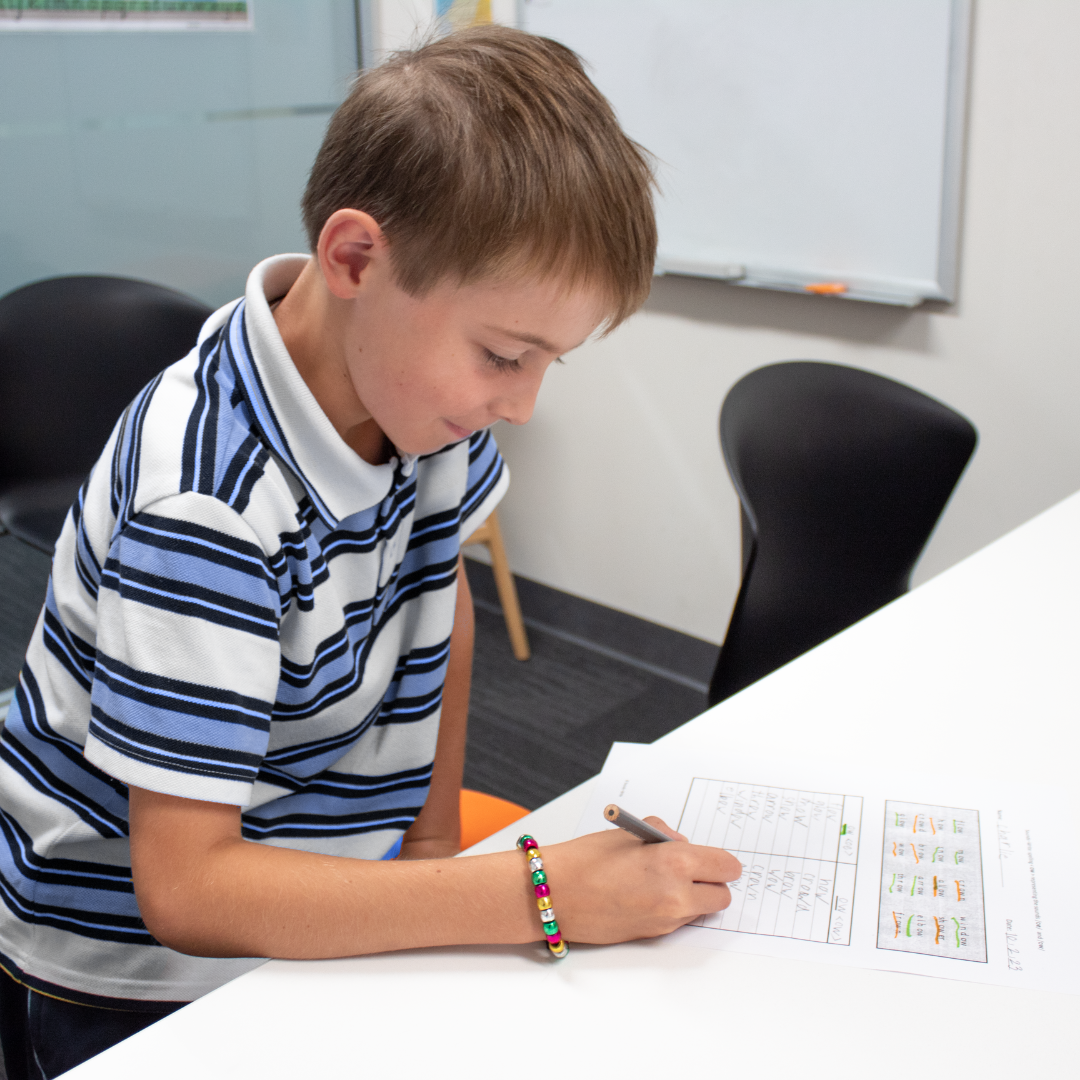
Specific learning disorder with impairment in written expression
A specific learning disorder with impairment in written expression is a persistent difficulty with written expression, handwriting and/or spelling that may occur in isolation, but more often, occurs in conjunction with dyslexia.
It can be defined as a specific learning disability that is neurological in origin. It is characterised by difficulties with accurate and/or fluent written expression and by poor spelling and handwriting skills. These ongoing delays in writing are often unexpected in relation to other cognitive abilities and the provision of effective classroom instruction.
Deficits in one or both of the following key academic areas are usually present:
• Difficulties with spelling.
• Difficulties with written expression.
These difficulties frequently result from a combination of deficits in the phonological component of language as well as in orthographic processing, and in working memory
Functional Impact Within the Classroom
Accuracy -
may add, omit or substitute vowels or consonants when spelling, may produce similar looking words, or words with a similar meaning, and reduced ability to write fluently due to poor spelling skills.
Implications for intervention:
• Develop phonological awareness and phonemic awareness skills.
• Improve phonics knowledge using a SSP Program.
• Develop knowledge of orthographic rules.
• Introduce and explain homophones.
• Develop knowledge of word origins.
Possible adjustments and accommodations:
• Allow content knowledge to outweigh spelling in written expression tasks.
• Provide a word bank or glossary of terms relevant to the topic.
• Encourage the use of assistive technology when the purpose of the assessment is not spelling (e.g. word prediction software, talking spell check).
Grammar -
makes multiple grammatical or punctuation errors within sentences.
Implications for intervention:
• Explicitly teach grammar and punctuation skills using resources such as ‘How to’ book series or ‘Grammar Magic’ program, ‘Jumpstart! Grammar’.
• Utilise a program that focuses on developing oral understanding and learning of the story to scaffold the writing process, such as the Talk for Writing program.
Possible adjustments and accommodations:
• Issue writing guidelines, templates, and paragraph headings to support the structure of extended writing.
• Provide access to a computer for written work and make sure that editing features and the spellchecker are used.
Clarity -
employs poor paragraph organisation and written expression of ideas lacks clarity.
Implications for intervention:
• Teach strategies that enable students to combine sentences to form well-structured paragraphs.
• Use a program that introduces the process of writing based on planning and outlining, drafting, revising and editing, and writing a final copy in a clearly structured, logical sequence.
Possible adjustments and accommodations:
• Provide alternative modes of assessment such as oral work, illustration, or multiple choice formats, as a substitute for a long written assignment.
• Provide a framework or scaffolding for extended writing tasks.
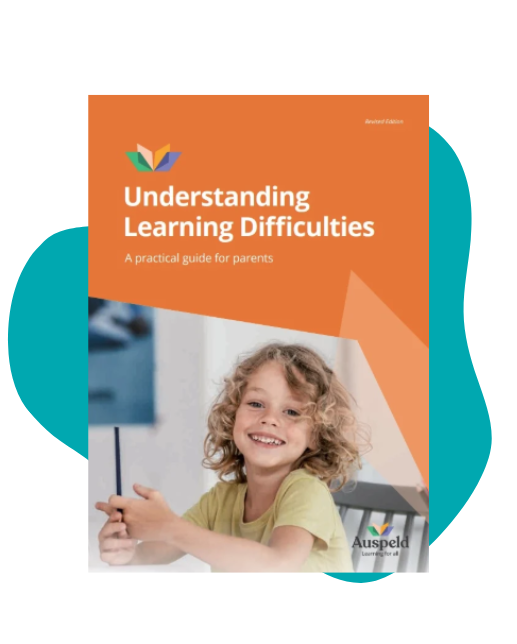
Another great place to start is to take a look at the resource ‘Understanding Learning Difficulties – A Practical Guide for Parents.‘
This easy to read, comprehensive guide is designed to provide parents and carers with current information about the nature of learning disabilities in children, and to offer practical guidance on the most appropriate identification, intervention and support.
Available completely online at Auspeld’s website or from our Shop
Become a Member and you can borrow this book from our library

Talk to us.
A specific SPELD SA Advisory Line
FREE CALL 1800 371 085
Available: Monday to Friday 9am - 1pm
Email: support@speldsa.org.au
Supported by The SPELD Foundation of South Australia and the Government of South Australia.